A growing workforce is hard to control. The larger your business grows, the more difficult it is to ensure that all your employees are recording their attendance, effectively managing shifts, making payroll processes run smoothly, and keeping an eye on productivity as well as compliance with labour laws.
A bulk of companies in India still use excel sheets, paper registers or standalone systems to manage their workforce. Although these practices appear economical on the face of it, they could ultimately result in higher operating water costs, payroll misfires, disgruntled employees and a loss of valuable admin time.
These challenges sound familiar to you being in business; it may be the right time for a Workforce Management Software solution.
So, here are 10 signs that tell you to upgrade your employee management process.
1. You’re Still Using Excel or Paper for Attendance
The Challenge
Some problems that arise due to manual attendance tracking are:
- Human errors
- Lost attendance records
- Incorrect working hours
- Delayed payroll
- Time theft
- Buddy punching
Keeping track of records, however, gets harder as the number of employees continues to grow.
The Solution
Attendance automation through biometric devices, mobile apps, RFID systems, or GPS-based check-ins is achieved with Workforce Management Software doing this, which removes the chances of human errors and gives the right attendance data live.
2. Payroll Errors Are Becoming Common
The Challenge
Payroll is based on correct attendance, leave records, overtime calculations and shift timings.
Manual processes often result in:
- Salary disputes
- Incorrect overtime payments
- Delayed salary processing
- Increased HR workload
Payroll mistakes not only take away time but can also undermine employee trust.
The Solution
Workforce Management Software reduces errors and accelerates payroll processing through direct integration of attendance and leave data with payroll systems.
3. Reasons why you should consider Shift Scheduling
The Challenge
You are wasting hours of productivity every week if your managers are creating weekly or monthly shift schedules.
Common issues include:
- Overlapping shifts
- Staff shortages
- Last-minute schedule changes
- Overtime mismanagement
This is especially prevalent in manufacturing, retail, health care, hospitality and logistics businesses.
The Solution
Automated shift scheduling assists in placing employees based on their availability, capabilities, and business needs while minimizing the probability of scheduling clashes.
4. Lack of Real-Time Workforce Visibility
The Challenge
Can you instantly answer these questions?
- Who is currently working?
- Who is absent today?
- Which department is understaffed?
- How much overtime was worked this week?
Otherwise, if you do not digitalise and automate the decision-making process, it becomes reactive instead of proactive.
The Solution
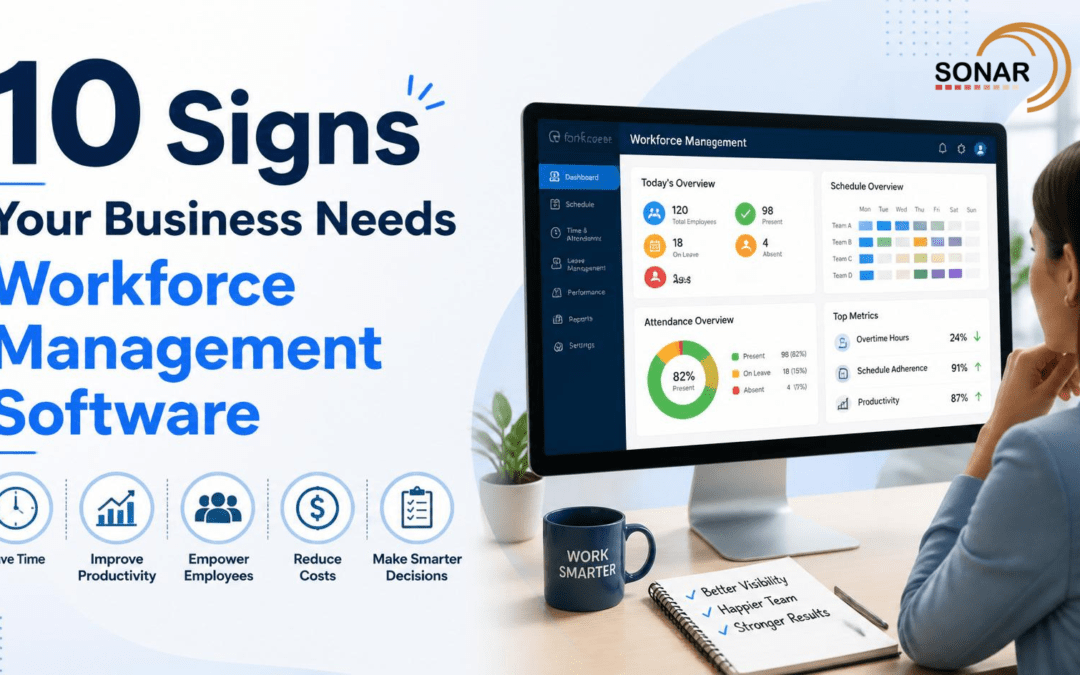
You are able to access real-time data in one centralized dashboard that shows you attendance, shifts, leave and overtime alongside workforce utilisation providing insights for faster decision making.
5. Managing Field Employees Is Difficult
The Challenge
Here is the challenges faced by sales teams, Service Engineers or delivery Staffs or Technicians:
- Verifying employee locations
- Tracking client visits
- Monitoring work hours
- Preventing false attendance
If we cannot see who did what, accountability becomes impossible.
The Solution
Employee tracking, attendance mobile apps with GPS tracking and geofencing would not only safeguard accurate check-ins but also promote remote employees management.
6. HR Teams Are Buried in Administrative Tasks
The Challenge
Your HR team could be busy all day doing things like:
- Approving leave requests
- Correcting attendance records
- Managing shift changes
- Preparing reports
- Coordinating payroll
That leaves little room for recruiting, engaging employees, or even strategic planning.
The Solution
Workforce Management Software easily automates everyday procedures, so HR can spend less time on administrative tasks and more time on initiatives that grow the business.
7. Employee Productivity Is Declining
The Challenge
It can prove a challenge to spot productivity problems in employees when managers have limited visibility into what the workforce is achieving.
Signs include:
- Frequent absenteeism
- High overtime with low output
- Missed deadlines
- Uneven workload distribution
Such inefficiencies lead to high operating costs and lower the bottom line.
The Solution
This can be done by using performance dashboards and workforce analytics, which makes it easier for managers to spot trends, find ways to optimize staffing and thus improve overall productivity.
8. Compliance Is Becoming More Complex
The Challenge
With your workforce expanding, it is far more difficult to maintain compliance on labour regulations and company policies.
Manual record-keeping can result in:
- Inaccurate overtime records
- Missing attendance data
- Compliance violations
- Challenges during audits
The Solution
The software marks attendance, overtime, and leave automatically and creates reports that help you stay in compliance and ease the process of audits.
9. Your Business Operates from Multiple Locations
The Challenge
Handling employees in different branches or cities usually causes unequal processes and little visibility.
At the same time, without a central view of data managers may be missing out on being able to see how workforce performance stacks up across locations.
The Solution
Cloud-based Workforce Management Software helps organizations manage their employees in more than one location from a centralized hub, ensuring adherence to common practices and retaining better control over operations.
10. Business Growth Is Increasing Operational Complexity
The Challenge
Manual processes to manage your workforce become more difficult to sustain as your company grows.
You may experience:
- Increased administrative costs
- Slower decision-making
- Poor coordination between departments
- Difficulty scaling operations
Something that was effective for a team of 20 employees might no longer be appropriate for a workforce of 200.
The Solution
Increased scalability involves fitting your enterprise into a relevant Workforce Management Software would help to automate operations, enhance efficiency, and back-end growth in the long run.
What Should You Look for in Workforce Management Software?
What to look for when assessing a solution:
- Attendance and time tracking
- Shift scheduling
- Leave management
- Overtime tracking
- Payroll integration
- Mobile attendance
- GPS and geofencing
- Employee self-service portal
- Real-time dashboards
- Compliance reporting
- Workforce analytics
- Cloud-based access
- Integration with ERP and HRMS systems
If you purchase software that is equipped with these capabilities, it not only meets your current needs but also supports future growth.
Benefits of Implementing Workforce Management Software
Businesses that adopt Workforce Management Software often experience:
- Reduced payroll errors
- Faster attendance processing
- Improved workforce productivity
- Better shift management
- Lower administrative workload
- Enhanced employee accountability
- Increased compliance with labour regulations
- Better resource planning
- Real-time operational visibility
- Easier business scalability
So all of these improvements are aimed at not only reducing the cost but a better and efficient working environment.
Conclusion
If your workforce is struggling with keeping track of attendance, the problem will only get worse as your business grows if you keep doing this manually! You see; payroll can’t be accurate, shifts can be a nightmare to convey and schedules unevenly distributed without transparency – compliance issues rise even more difficult (especially in today’s world).
Modern Workforce Management Software enables organizations to automate repetitive tasks, help manage complex operations efficiently and monitor the workforce in real-time. From manufacturing facilities, warehouses and retail chains to logistics companies and corporate offices, true investments here will lower administrative burdens, maximise workforce output and enable sustainable business expansion for all problem areas.
If you spot these warning signs early and implement a centralised workforce management system, your business is on its way to scaling confidently.
Frequently Asked Questions
1. What is Workforce Management Software?
It is a software solution that helps businesses manage employee attendance, shift scheduling, leave, overtime, productivity, and workforce analytics through a centralized platform.
2. Is Workforce Management Software suitable for small businesses?
Yes. Small and medium-sized businesses can benefit by automating routine HR tasks, reducing payroll errors, and improving workforce efficiency.
3. Which industries benefit the most from Workforce Management Software?
Manufacturing, warehousing, logistics, retail, healthcare, hospitality, construction, IT services, and any organization with shift-based or distributed workforces.
4. Can Workforce Management Software integrate with existing systems?
Most modern solutions integrate with payroll software, ERP systems, HRMS platforms, biometric devices, and mobile applications.
5. How does Workforce Management Software improve employee productivity?
It automates attendance tracking, optimizes shift planning, provides real-time performance insights, reduces administrative work, and helps managers allocate resources more effectively.